
Why Leather Portfolios Still Matter in a Digital-First Professional World
In today’s professional environment, most work happens on screens. Documents are stored in the cloud, meetings are scheduled online, and notes are often taken on laptops or tablets. Efficiency has improved, communication is faster, and information is always accessible.
Yet, despite this digital transformation, many of the most important professional moments still happen in person.
Job interviews, client meetings, contract signings, conferences, and business presentations are physical situations where perception, attention to detail, and personal presence still play a crucial role. In these moments, the tools a professional chooses to carry are not just functional objects, they become part of the way that person is perceived.
A leather portfolio is one of those objects that has maintained its relevance not because of nostalgia, but because of what it communicates.
It communicates organization.
It communicates preparation.
It communicates attention to detail.
It communicates professionalism.
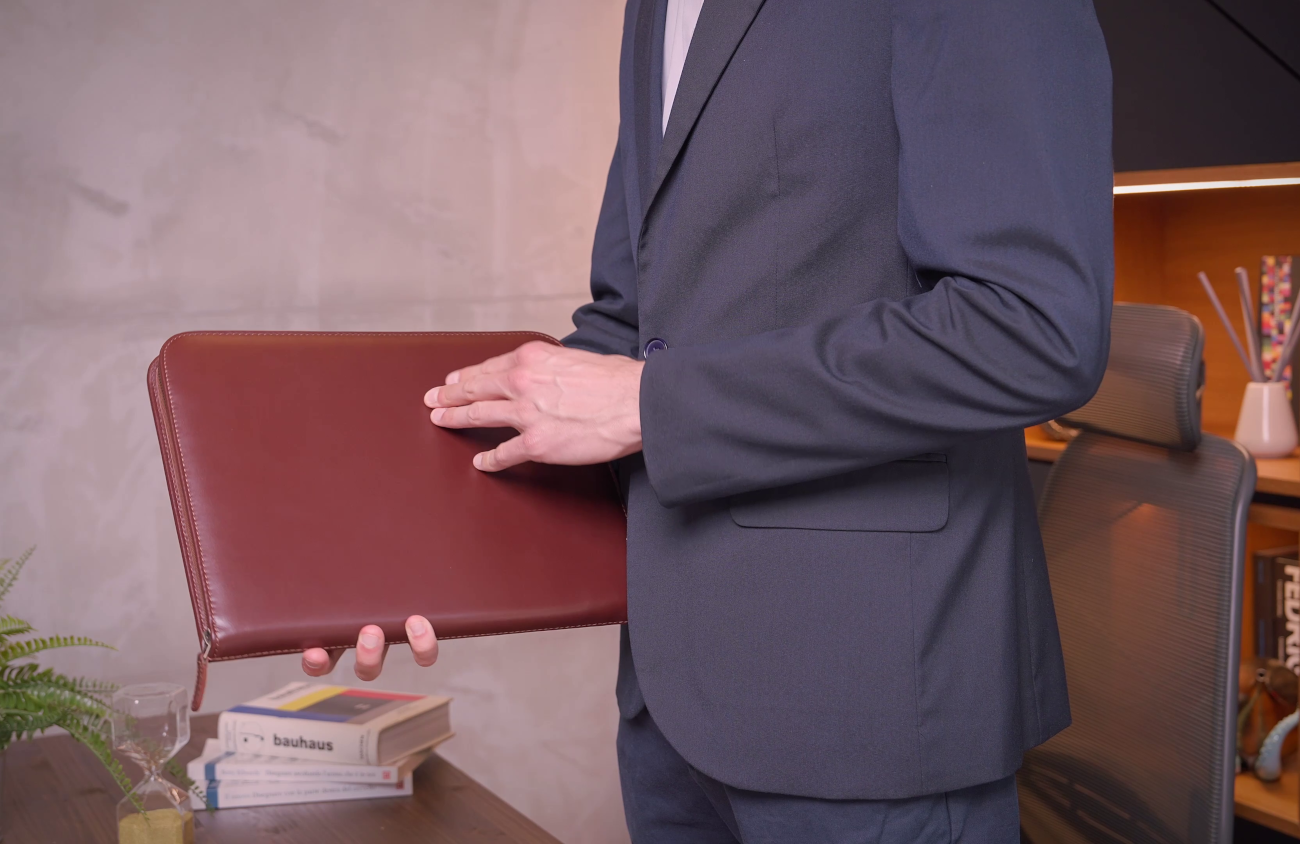
When someone walks into a meeting with loose papers, a worn backpack, or a plastic folder, the impression is very different from someone who places a structured portfolio on the table, opens it, and has everything in order: documents, notes, a pen, a business card.
The difference is not about the object itself, but about the message it sends: I am prepared. I take this seriously. I respect your time and mine.
In a world where everyone has the same laptop and the same smartphone, physical objects have become one of the few remaining ways to express personal and professional identity in a subtle way. This is particularly true in industries such as consulting, finance, law, architecture, design, and management, where meetings, presentations, and client relationships are still central to daily work.
The Value of Presence in Professional Settings
Professional presence is shaped by more than competence alone. It is also influenced by clarity, preparation, and the way a person presents themselves in important moments. In face-to-face meetings, these signals are often perceived before a single word is spoken.
A portfolio helps create that sense of order. It gives structure to documents, supports a more composed way of taking notes, and reduces the visual clutter that can undermine an otherwise polished impression. In environments where trust and credibility matter, these details are rarely insignificant.
Why Physical Tools Still Have a Role
There is also a practical aspect that is often underestimated. During a meeting, a portfolio allows you to:
- Keep documents organized and immediately accessible
- Take notes without the barrier of a screen
- Maintain eye contact instead of looking at a keyboard
- Avoid distractions from emails and notifications
- Create a more direct and focused interaction
For many professionals, writing notes on paper during a meeting is not a step backward, but a way to be more present and attentive. It can support concentration, improve recall, and encourage a more deliberate exchange of ideas.
This is why, even in highly digital environments, many executives, consultants, and managers still bring a portfolio to important meetings. It is not about rejecting technology, but about choosing the right tool for the right moment.
Digital Efficiency and Professional Identity
Digital tools are essential for storing, sharing, and editing information. They have transformed the pace and scale of modern work. But efficiency alone does not define professional identity.
The most effective professionals are often the ones who understand when digital tools serve the task best, and when a physical object offers a better experience — especially in meetings, interviews, presentations, and other contexts where attention, interaction, and first impressions matter.
A leather portfolio, in this sense, is not an outdated accessory. It remains a practical and relevant professional tool for situations that require clarity, organization, and composure.
Because even in a digital world, first impressions still happen offline.


Commenti